

The end of the beginning
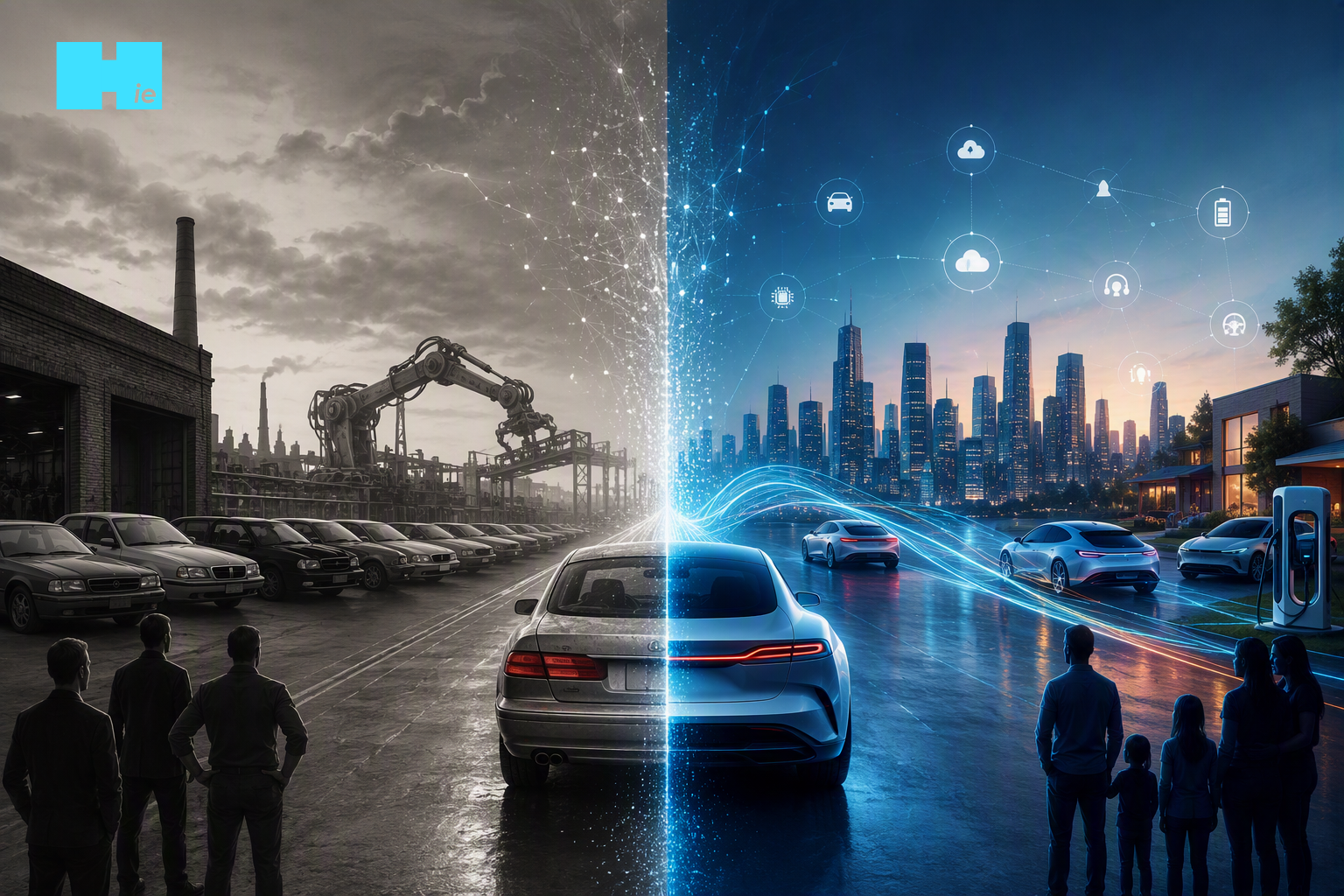
The mobility sector loves to tell itself stories about technology. We talk about electrification, autonomous vehicles, connectivity and software-defined cars. Yet the biggest disruptions rarely arrive because of technology alone. They emerge when economics, regulation, consumer behaviour and geopolitics begin pulling in the same direction.
The UK automotive landscape has noticeably shifted in the last two years. After decades of the sames brands being seen on our roads, a raft of new OEM brands arrived in the UK and quickly began to grow. Most industry observers are looking at mandates, tariffs, foreign government subsidies and EV grants. The truly disruptive forces, however, are far less visible. The ripples of change that have resulted in the current wave of buyer behaviour didn’t happen this year, not even this decade. Not even this century.
To understand where the market is heading between 2027 and 2035, we need to look backwards.
The Beginning: When Premium Brands Went Mainstream
A compelling argument can be made that today's Chinese automotive expansion began in 1994 when BMW acquired Rover. At first glance, the connection appears tenuous, but Rover's decline marked the start of a profound restructuring of the UK automotive market. BMW bought the Rover car company but didn’t fully commit to the manufacturing overhaul that would have been needed. Instead of rebadged, mainstream BMW’s, buyers got underdeveloped, unreliable and expensive models which made less and less financial sense to UK buyers in the face of stiffening competition. Throughout the 1990s, Britain's traditional mainstream volume brands came under pressure from three simultaneous forces:
Premium manufacturers expanding downward into lower price segments
Japanese manufacturers improving quality and reliability
Currency and economic instability reshaping competitiveness
Mercedes-Benz launching the A-Class in 1998 was particularly significant. It demonstrated that premium brands no longer intended to compete solely at the top end of the market. Consumers who might once have purchased a Ford Mondeo, Vauxhall Vectra or Rover 75 could now aspire to a premium badge. When BMW then sold Rover, and the problem with model development and buyer frustrations exacerbated, the brand eventually collapsed in 2005. There was no longer a volume UK car brand left in the UK. Yes, Ford, Vauxhall, Nissan, Honda and Toyota all had car plants operational, but none of those brands positioned themselves as, and crucially the British public didn’t think of them as, truly “British”. The decisions by the two German powerhouses, followed by a series of seemingly disconnected events, led the UK car market to become tighter than ever and ripe for conquest;
The financial crisis of 2008.
The premiumisation of Skoda and SEAT through Volkswagen Group platform and component sharing.
The smartphone revolution.
Tesla's redefinition of vehicle interiors.
Dacia & Cupra’s succesful launch showing the market was open to new brands if the cost was right.
Covid-19 and the semiconductor shortage.
The inflation shock that followed.
The emergence of large language models and data-driven products.
Each event quietly altered customer expectations while weakening traditional automotive assumptions. The result is the market we see today.
Chinese OEMs Didn't Create The Opportunity. They Found It.
Many Western commentators describe Chinese brands as disruptors. They're not. They are opportunists.
The disruption occurred years earlier. When customers became accustomed to monthly payments rather than vehicle prices. When Over The Air software updates became norms. When vehicle ownership became less important than mobility access. When consumers began treating car purchases the same as smartphones. Chinese manufacturers simply recognised these shifts faster than most legacy OEMs. Brands such as BYD, MG, Omoda and Jaecoo entered a market already primed for disruption.
Crucially, they arrived at precisely the moment when regulatory pressure was forcing manufacturers to accelerate EV adoption. The UK's ZEV Mandate created increasingly ambitious EV sales targets for manufacturers, encouraging OEMs to expand electric vehicle volume rapidly.
At the same time, Chinese brands were gaining significant momentum in the UK market, benefiting from competitive pricing, strong technology offerings and expanding dealer networks. Industry reporting suggests Chinese brands have rapidly increased their share of UK registrations and are becoming major participants in the EV transition.
The Leasing Fork In The Road
The next major disruption isn't new vehicle sales. It's used vehicle supply. Between 2023 and 2026, thousands of Chinese-manufactured vehicles entered UK fleets through attractive leasing offers. Many consumers didn't buy these cars because they trusted the brands. They bought them because the monthly payment worked. That distinction matters.
From 2027 onwards, a growing wave of first-generation leased Chinese vehicles will begin returning to the used vehicle market. This creates three possible scenarios.
Scenario 1: Residual Value Compression
If demand fails to keep pace with returning supply, used prices fall sharply. This creates attractive opportunities for second and third owners. But it also causes pain for leasing companies and OEM captive finance businesses carrying residual value risk. This is the general accepted view, which has saw BEV used vehicle values drop significantly, with 2026 being potentially the market bottoming out.
Scenario 2: Residual Values Hold
If reliability proves strong, dealer networks mature and consumer acceptance continues growing, used buyers of Chinese vehicles become normalised, potentially on 2nd Cycle leases. With more and more PHEV and BEV vehicles on used car forecourts, the used car buying market becomes more stable to predict value.
Residual values stabilise - Leasing companies gain confidence - Chinese brands accelerate further.
Scenario 3: AI Changes Everything
This is the most interesting possibility. Because by the late 2020s the industry's biggest valuation driver may no longer be powertrain quality or brand heritage. It may be data.
But we’ll come back to that….
Why Legacy OEMs Cannot Cost-Cut Their Way Out
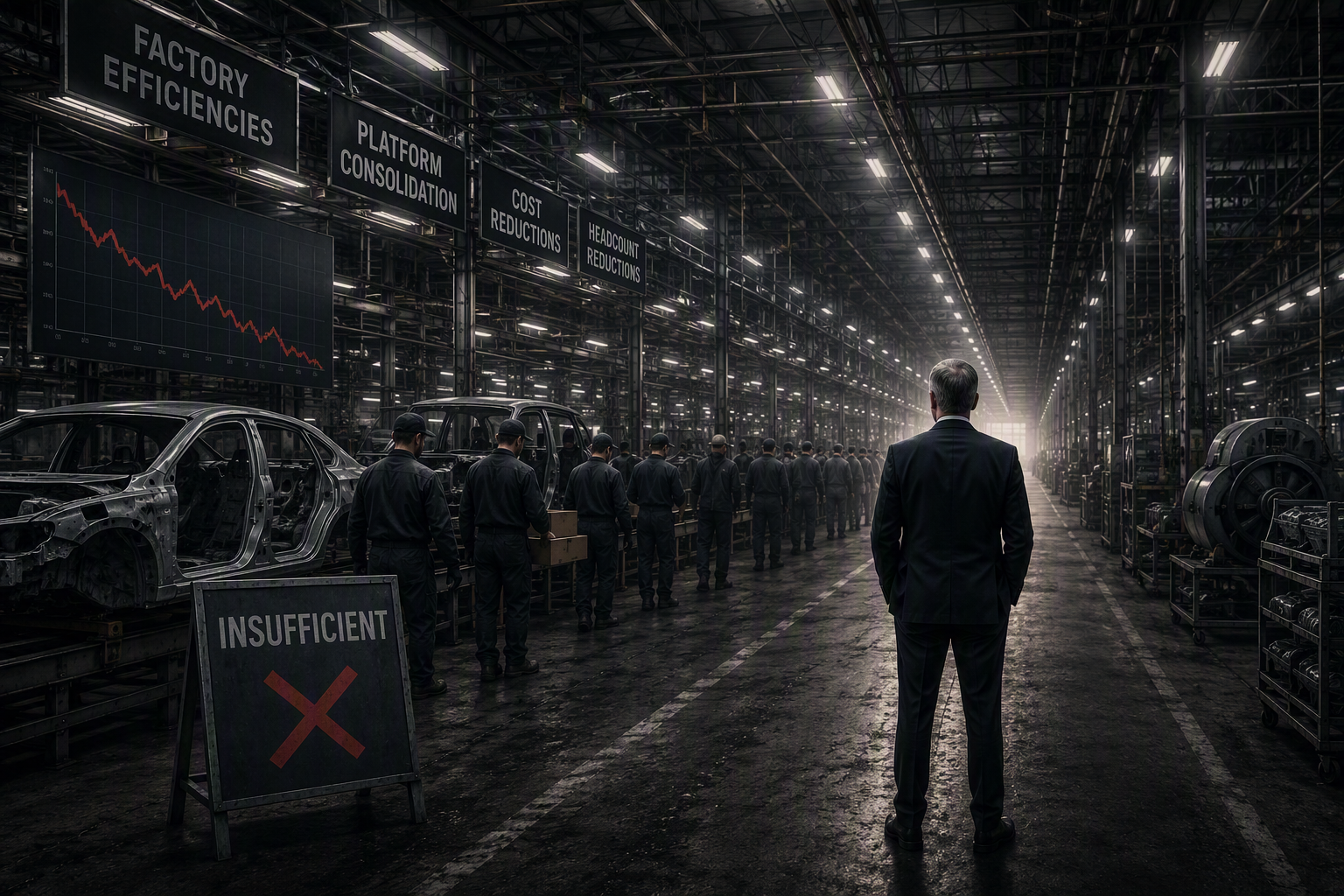
Many established manufacturers continue responding to reductions in market share with conventional tactics:
Factory efficiencies
Platform consolidation
Cost reductions
Headcount reductions
These actions are necessary. But they are insufficient. The challenge isn't simply competitive pricing. The challenge is that the definition of value has changed. Legacy manufacturers must become masters of four disciplines simultaneously:
1. Master Data
Vehicle manufacturers historically sold metal. Future mobility businesses monetise information. Customer data, behavioural data, fleet intelligence and energy data could become more valuable than traditional manufacturing margins.
2. Build Subscription Ecosystems
The winners may no longer sell vehicles. They will sell mobility experiences. Subscription, usage-based access and integrated digital ecosystems will become increasingly important revenue streams.
3. Think Beyond Vehicle Sales
The traditional profit model depends heavily upon a replacement cycle. Future success may depend on monetising lifetime customer journeys. Mobility providers, not car manufacturers, may become the dominant industry players.
4. Embrace AI Relentlessly
The biggest threat facing legacy OEMs is not BYD. It is organisational inertia. Manufacturers that fail to integrate AI into product design, customer engagement, pricing, fleet management and operations will gradually become irrelevant.
When Cars Become AI Platforms
Imagine a used vehicle in 2036.
Its value may depend less on mileage and service history and more on:
Autonomous capability
AI assistant quality
Fleet utilisation potential
Software upgrade compatibility
Data ecosystem integration
The sheer rate of efficiency advancement in each new BEV platform makes this the automotive equivalent of the Space Race of the 1960s. If autonomous ride-hailing expands beyond today's early deployments, vehicle utilisation rates could rise dramatically. A privately owned vehicle used for two hours daily becomes a commercial mobility asset operating for twelve or more hours. In that environment, durability matters more than prestige. Software matters more than heritage. And low-cost manufacturing becomes an enormous strategic advantage. This is where Chinese OEMs could be particularly dangerous competitors.
The automotive industry increasingly resembles the smartphone industry. Hardware margins shrink. Software margins grow. The most valuable asset becomes user engagement and data. Large language models have already changed consumer expectations around digital experiences. The next logical step is AI-native mobility. The Customer Lifetime Value now becomes more important to the OEM than the Vehicle Lifetime Value. Owning the vehicle to the recycling point through 2nd and 3rd leases captures the Customer to the brand in the same way Apple and Samsung have in mobile phones, if the monthly economics continue to work for the customer, the perceived “hassle” of changing logins, integrated features and subscriptions tethers the Customer to the brand.
The Next Decade Belongs To Business Models, Not Brands
The automotive industry often frames change as a battle between legacy manufacturers and Chinese challengers. That is the wrong lens. The real battle is between old business models and new ones.
Chinese manufacturers happen to be aligned with many of the forces reshaping mobility:
Electrification
Software-defined vehicles
Data monetisation
AI integration
Flexible ownership
Aggressive pricing
What happens next will not be determined by who builds the best vehicle. It will be determined by who best understands the invisible forces shaping mobility demand. And those forces are no longer mechanical. They are financial, digital, behavioural and increasingly intelligent.
To face the future, the traditional OEMs have to look to make learnings from the past. Alarm bells should have been ringing when Honda released a Civic with tinted windows as standard. As time went on, the gap between mainstream and premium eroded. EVs, WiFi, synthetic leather and touch screen controls have changed the driving experience to such a degree that nearly all new cars feel remarkably similar to drive. Cost of supply for crucial materials like Lithium, Cobalt, Nickel, Disprosium and Terbium mean that the outright purchase price of vehicles has risen to a point that leasing is the MOST sensible option for a buyer, no longer the preserve of fleets.
That’s the beginning of the end for any OEM who hasn’t optimised data as the core to their Customer Lifetime Value.
Some legacy OEMs will adapt. Some will thrive. Some will disappear. And it isn’t about the new brands today, it’s about failing to see what the most important thing about being an automotive manufacturer is all about.
The customer.