

The Unseen Forces Powering the Next Mobility Transformation
For the last decade, the mobility industry has been captivated by visible change.
Electric vehicles. Shared mobility. Subscription services. Connected fleets. Autonomous technology. Micromobility. These innovations have dominated headlines, attracted investment, and shaped boardroom strategies. Yet many of the biggest commercial winners and losers of the next five years may not be determined by vehicle technology at all. Instead, they will be determined by two less visible forces:
Data and insurance.
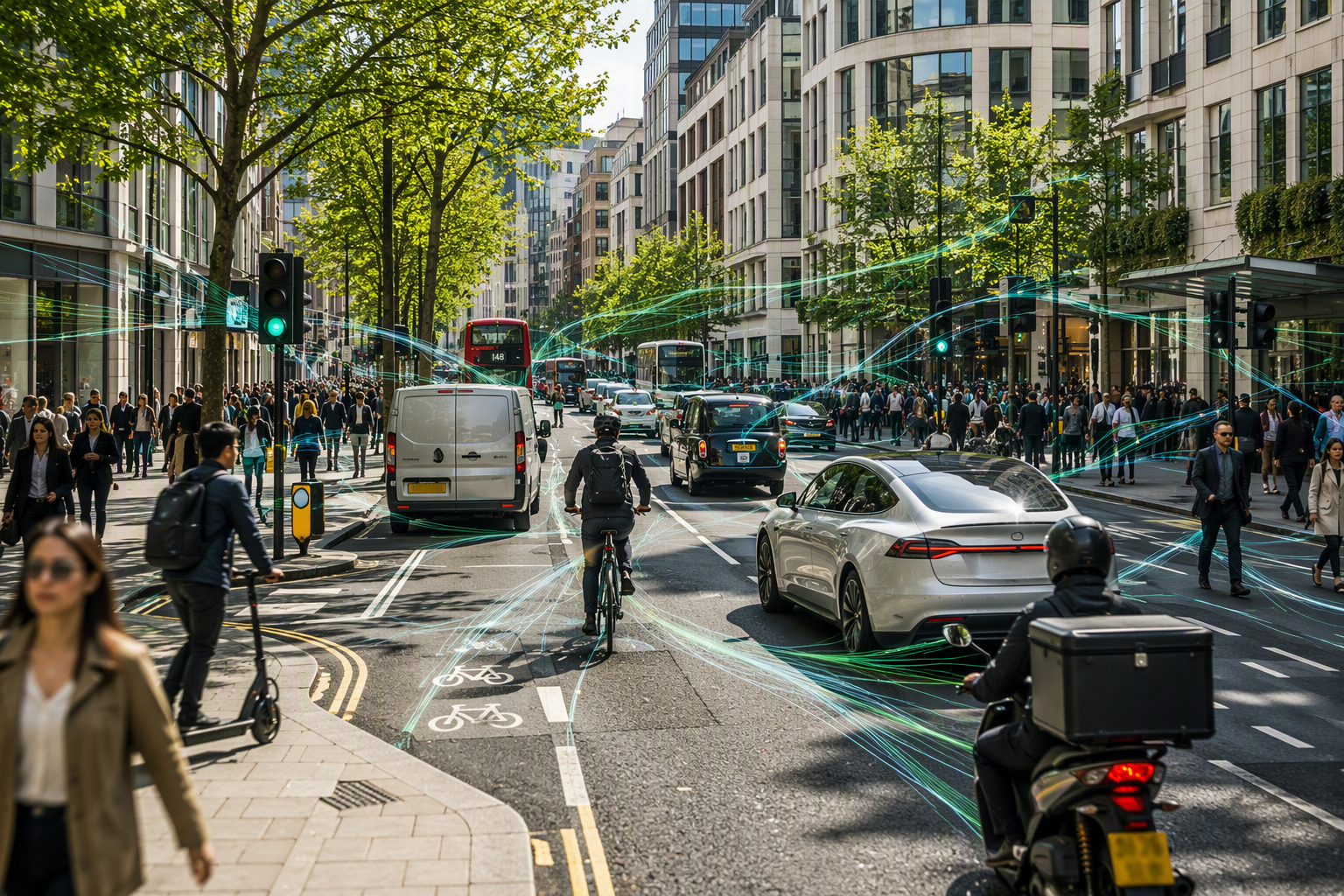
They are not particularly exciting to talk about. They rarely appear in promotional videos. Consumers rarely buy a vehicle because of them. Yet they increasingly determine who can scale, who can monetise, who can manage risk, and ultimately who can build sustainable mobility businesses. The next mobility transformation may not be powered by batteries or software alone. It may be powered by the organisations that best understand how to convert mobility data into intelligence and intelligence into insurable, profitable outcomes.
The Vehicle Is Becoming a Data Generator
Historically, vehicles were products. Today, they are platforms. Every connected vehicle, e-bike, scooter, fleet asset and mobility service generates vast quantities of information. Location data, driver behaviour, charging activity, maintenance events, utilisation patterns, environmental conditions and customer interactions now flow continuously across mobility ecosystems. The challenge is no longer collecting data. The challenge is understanding it. Many organisations sit on terabytes of mobility information while extracting only a fraction of its potential value.
This creates an enormous opportunity.
The companies that can transform raw mobility signals into actionable intelligence will gain significant competitive advantages across customer experience, operations, product development, risk management and commercial growth. The mobility industry is rapidly moving from:
Assets → Connectivity → Intelligence
And intelligence increasingly becomes the differentiator.
Why Insurance Will Become Strategic Rather Than Administrative
Most mobility businesses still view insurance as a cost centre. That mindset is becoming outdated. Insurance has traditionally relied on historic data, broad demographics and retrospective claims analysis. However, connected mobility ecosystems are enabling something fundamentally different. They allow risk to be measured continuously rather than estimated periodically. Instead of asking: "What type of driver are you?", insurers can increasingly ask: "How do you actually behave?". This shift has profound implications across automotive and micromobility markets.
Risk becomes dynamic. Pricing becomes personalised. Claims become automated. Fraud becomes easier to identify. Commercial models become more flexible. Insurance moves from being a product layered onto mobility to becoming a core component of the mobility experience itself.
The LLM Effect
Large Language Models add a new dimension to this evolution. The mobility sector has spent years collecting data. LLMs finally provide a scalable mechanism for interpreting it. Traditionally, extracting value from mobility data required specialist analysts, data scientists and lengthy reporting cycles. Now imagine a fleet manager simply asking: "Why did vehicle utilisation decline in Birmingham last month?" or a mobility operator asking: "Which customer segments generate the highest lifetime value but lowest insurance claims?" or an insurer asking: "What characteristics are common across our safest riders?". Rather than generating static reports, future mobility systems will generate answers.
The real breakthrough is not that LLMs create content. The breakthrough is that they lower the barrier between people and data. As mobility organisations integrate AI into their operations, decision-making cycles can accelerate dramatically. Questions that previously took days or weeks to answer may be answered in seconds.
Micromobility May Be the Biggest Beneficiary
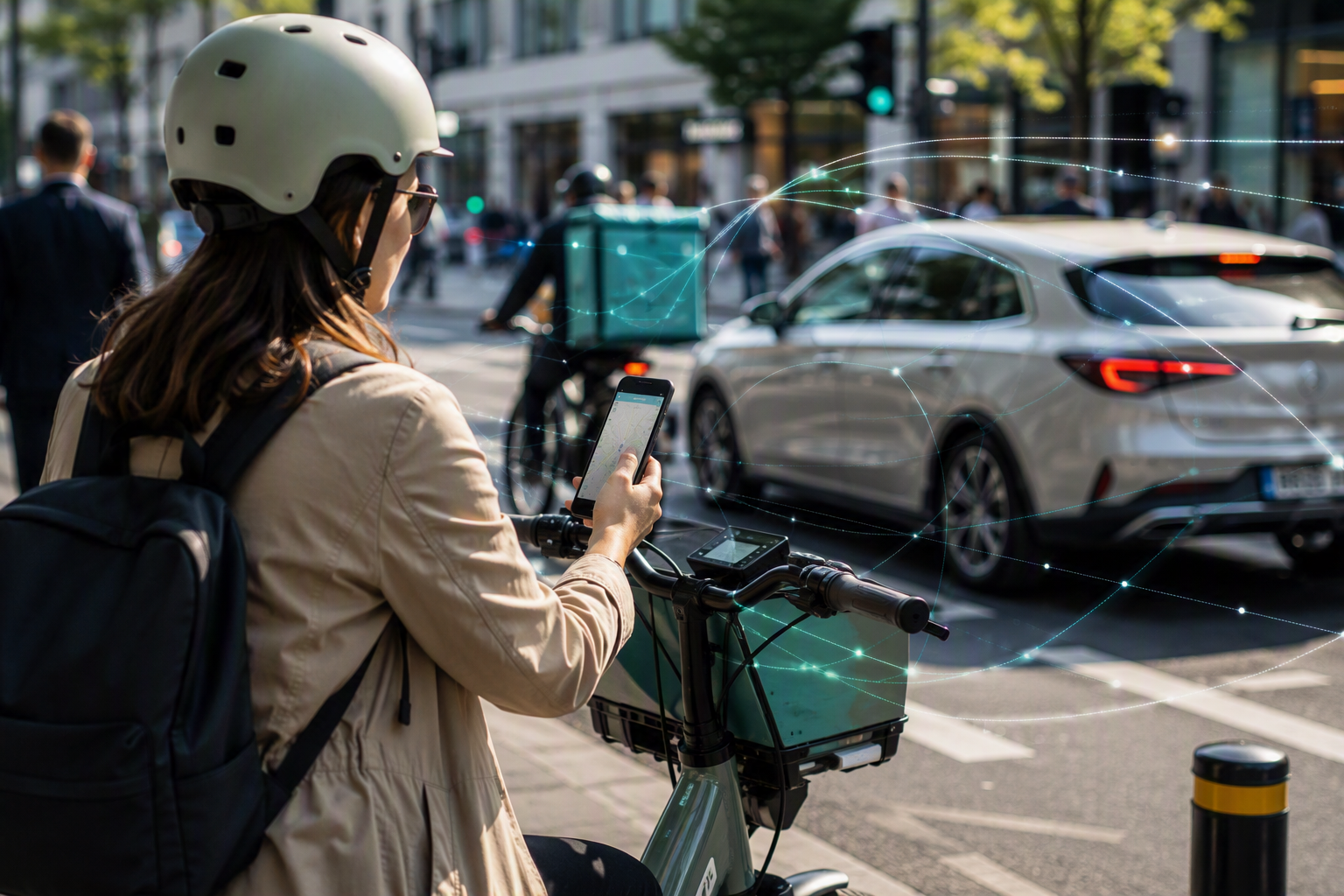
Automotive receives most of the attention, but micromobility may experience an even bigger shift. One of the biggest constraints facing scooters, e-bikes and shared mobility operators has always been risk.
Collisions.
Theft.
Vandalism.
Misuse.
Asset recovery.
Regulatory concerns.
Insurance costs.
Traditionally these challenges have been difficult to quantify accurately.
However, increasingly connected devices generate rich behavioural datasets:
Rider behaviour
Route selection
Speed profiles
Parking compliance
Environmental conditions
Asset health
Incident reporting
Combined with AI-driven analysis, operators can gain much deeper insights into how risk emerges and how it can be reduced. This potentially enables entirely new insurance models based on real-world usage rather than assumptions. For a sector that often struggles with profitability, that could be transformative.
The Rise of Embedded Protection
Consumers increasingly expect frictionless experiences. Nobody wants a separate process for financing, servicing, charging, parking, subscriptions and insurance. The future points toward embedded ecosystems where protection becomes invisible. Insurance will increasingly be integrated directly into the mobility service itself. The customer may never even think about insurance in the traditional sense. They simply use a vehicle, subscribe to a service, unlock a scooter or access a fleet. Protection becomes intelligently layered into the experience. The organisations controlling the customer relationship and the underlying data are therefore positioned to capture significantly more value than those supplying a standalone product.
A New Commercial Battleground

The next generation of mobility competition will not focus solely on who builds the best vehicle. It will focus on who builds the best ecosystem.
The winners will likely be those able to answer questions such as:
Who owns the customer relationship?
Who owns the data?
Who can convert data into intelligence?
Who can convert intelligence into lower risk?
Who can convert lower risk into better economics?
These capabilities reinforce one another. Better data drives better insights. Better insights reduce risk. Lower risk improves insurance outcomes. Improved economics attract customers. More customers generate more data. The cycle accelerates.
What This Means for Mobility Leaders
Over the next three to five years, mobility leaders should spend less time asking: "What vehicle should we launch?" and more time asking: "What intelligence advantage are we creating?".
The most valuable future mobility businesses may not be defined by vehicle ownership, battery chemistry or even software platforms. They may be defined by their ability to understand human movement better than anyone else. We believe the industry is approaching a significant inflection point. The visible transformation of mobility is already underway. The unseen transformation, driven by data, insurance and AI-powered intelligence, is only just beginning.
And when it arrives at scale, it may reshape the mobility landscape far more profoundly than the technologies currently dominating the headlines.